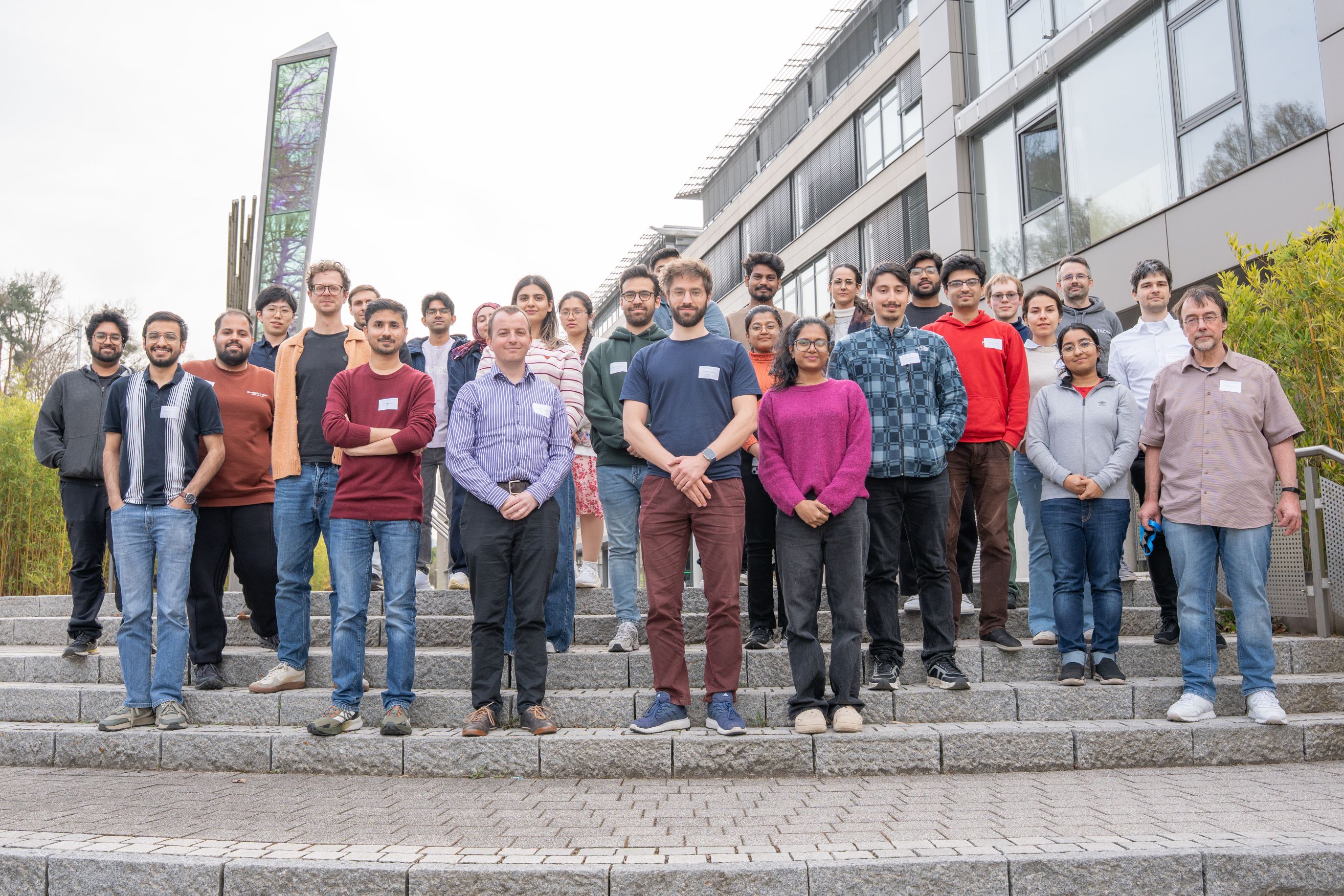
On March 23 and 24, 2026, curAHack took place once again as an interdisciplinary hackathon, this time at the German Research Center for Artificial Intelligence (DFKI) in Kaiserslautern. Around 25 participants took part to tackle current challenges at the intersection of the life sciences, medicine, and artificial intelligence.
This year’s challenges also covered a broad range of topics: from improving the resolution of cell cycle phases by combining single-cell RNA and chromatin data, to the targeted investigation of weaknesses in AlphaFold predictions, to AI-assisted analysis of ultrasound images. Another team worked on a machine learning model to predict individual cardiovascular risk based on microbiome data. The challenges were proposed by the curATime core partners.

Once again this year, prior knowledge of bioinformatics was not the main focus. Rather, curAHack once again provided a platform for interdisciplinary exchange, creative problem-solving, and collaborative work on innovative solutions. Participants discussed, programmed, and brainstormed during several intensive team sessions. Shared breaks and lunches also provided opportunities for networking and interdisciplinary exchange in an open and collaborative atmosphere.
The event concluded on Tuesday afternoon with presentations of the challenge results and the award ceremony for the best solution. This year, Challenge 3—“Rethinking Ultrasound”—from DFKI emerged as the winner. The team impressed with an approach to weakly supervised segmentation of cardiac and vascular ultrasound images. The goal of the project was to reduce the high effort required for pixel-accurate annotations by training the model using only a few point markers instead of complete segmentation masks. This was intended to enable efficient and robust image analysis.
We can conclude: In addition to innovative ideas, exciting potential solutions emerged in a short period of time within a dedicated and collaborative work environment.